Outfit ideas4 min read
How to match clothes and the colors that go together.
How to match clothes: build on neutrals, add one color at a time and let one color lead. Easy color pairs, tonal outfits and how to mix patterns.
In short
- Build on neutrals (black, white, cream, gray, navy, beige, denim) and add one color at a time.
- Pair colors that sit side by side or opposite on the color wheel, and let one color cover most of the outfit.
- Wear one pattern with solids, or two patterns of different sizes that share a color.
To match clothes, build on neutrals (black, white, cream, gray, navy, beige, denim) and add one color at a time. Pair colors that sit next to each other or opposite each other on the color wheel, and let one color lead while the rest support it.
Patterns follow one rule too: one pattern with solids is always safe, and two patterns work when they differ in size and share a color. Here is how each part works, with tables you can check against your closet.
Start with neutrals
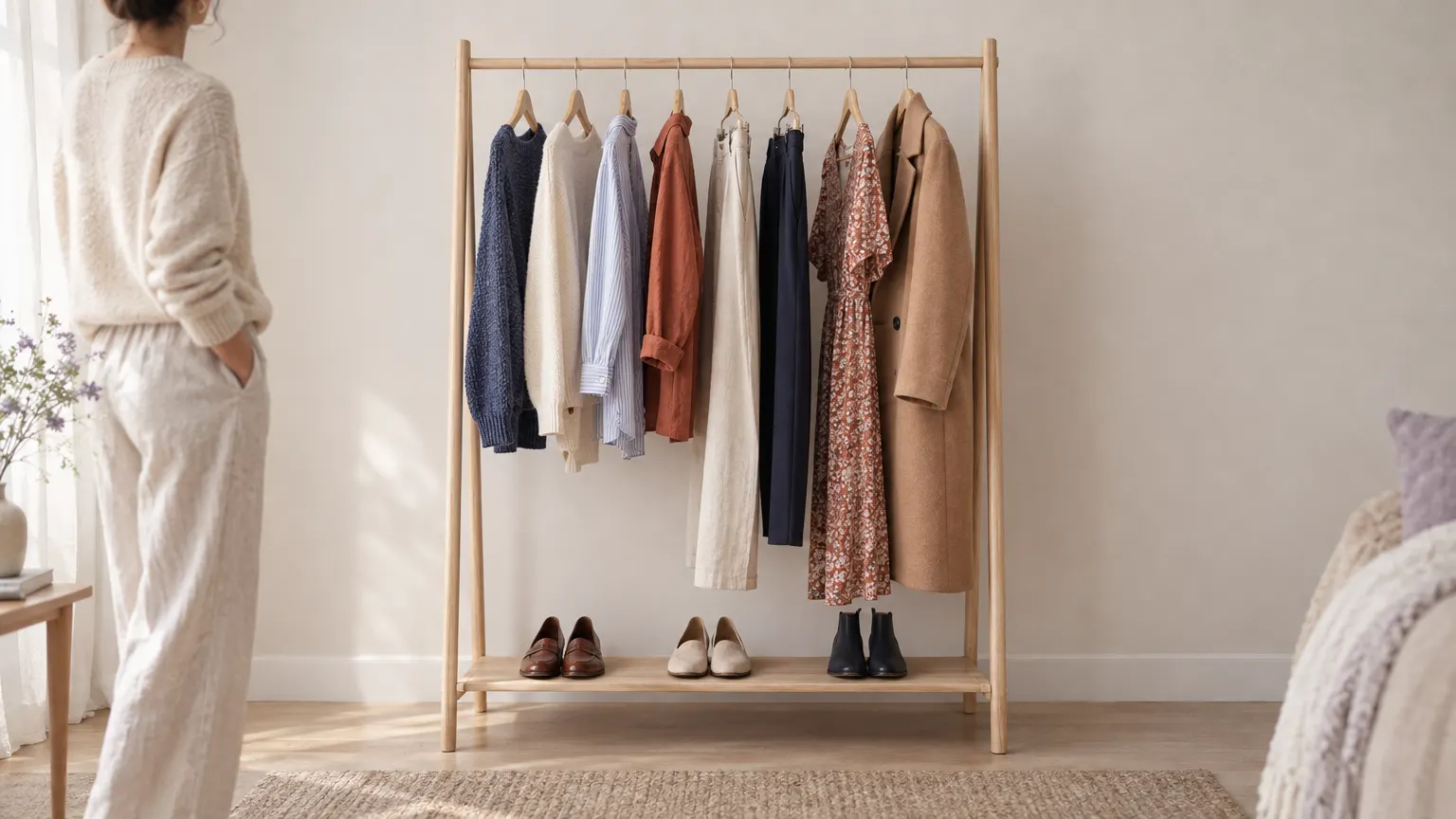
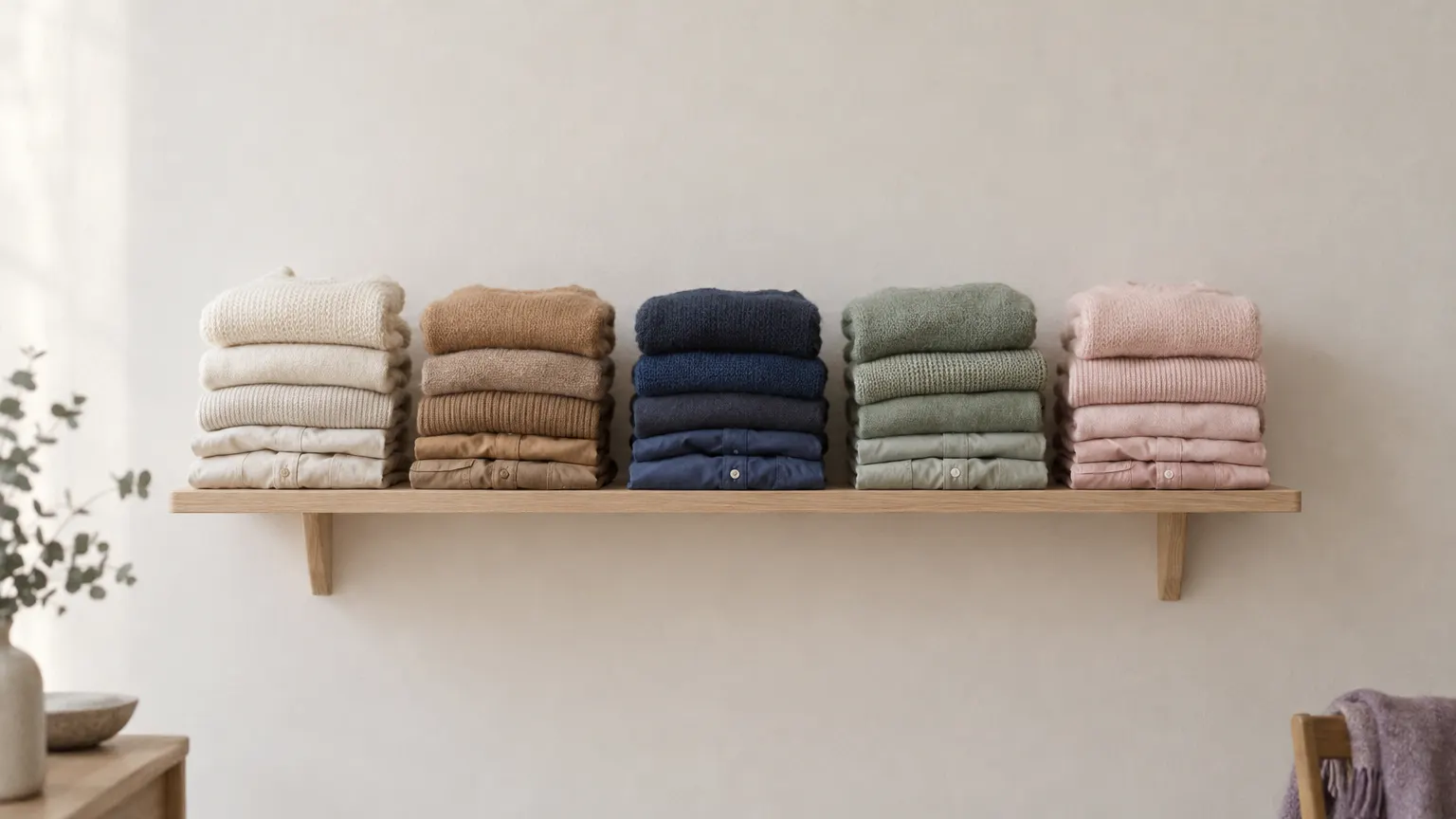
Neutrals go with each other and with almost every color, so they are the base of any outfit that matches. Black, white, cream, gray, navy, beige, camel, olive and blue denim all count.
A few things make neutrals look intentional:
- Lean warm or cool. Cream, camel and brown are warm. White, gray and black are cool. Navy and denim sit happily with both.
- Mix light and dark. Navy with cream, black with white. Two neutrals of the same depth can look washed out.
- Treat denim as a neutral. Blue jeans go with nearly any top you own.
Once you have a neutral base, add one color. That is most good outfits.
Colors that go together
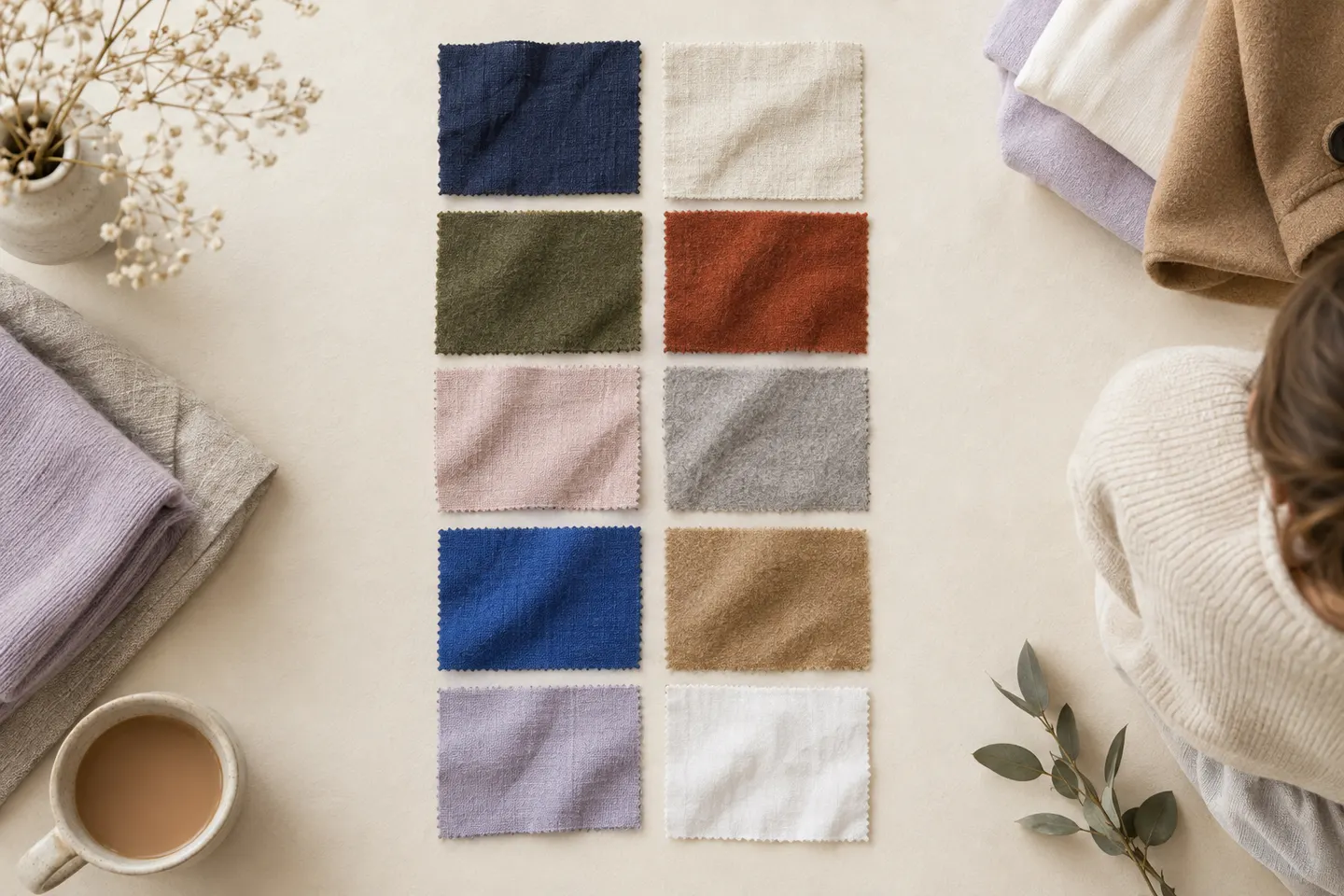
Two ideas from the color wheel cover most pairs. Neighbors, like blue and green or red and orange, sit easily together. Opposites, like blue and orange or purple and yellow, look bold, so use a softer shade of one, or only a little of it.
| Color | Goes with | Try it as |
|---|---|---|
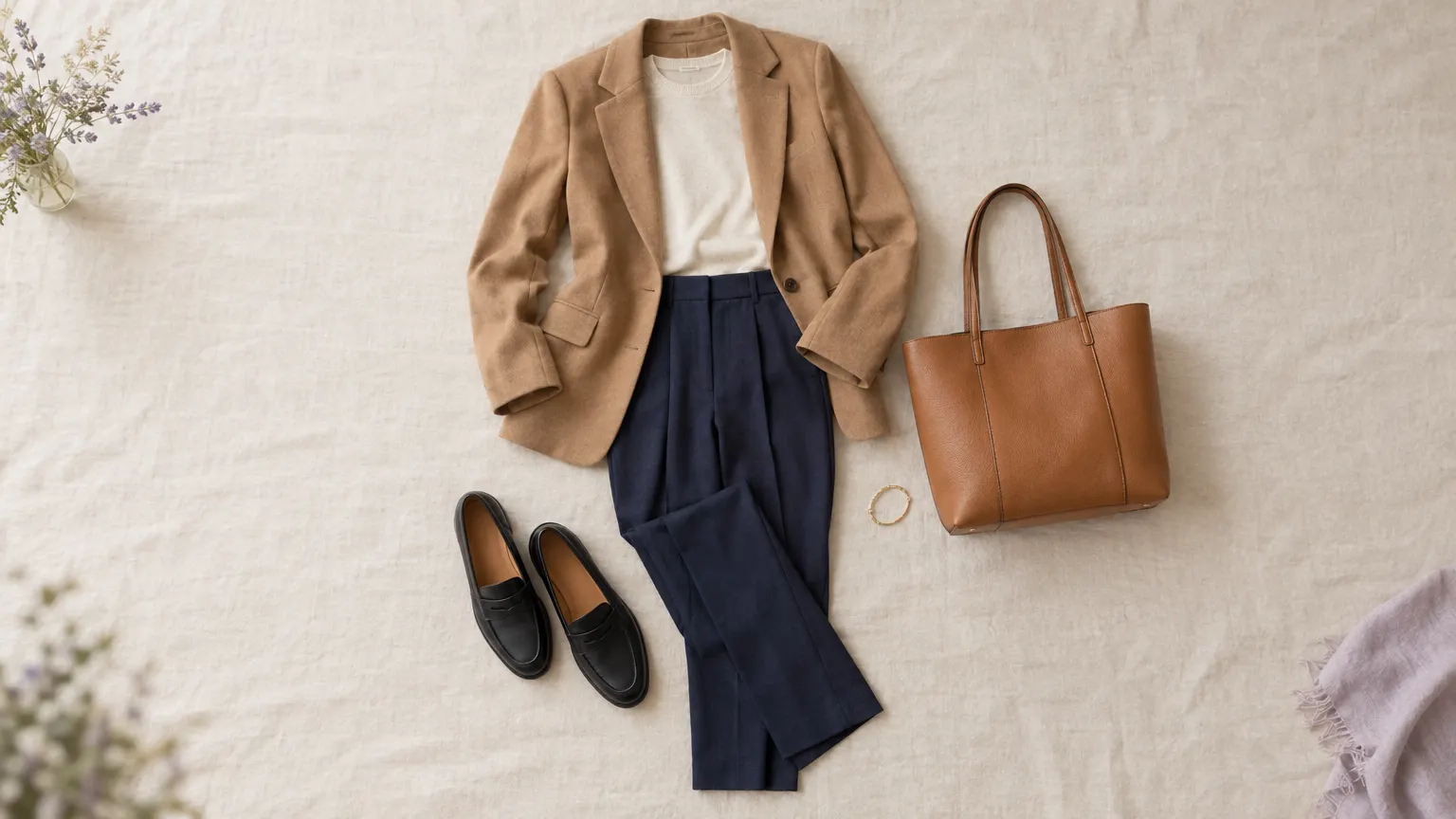
| Navy | Cream, camel, red, pale pink | Navy knit, cream trousers |
| Olive | Rust, cream, denim, tan | Olive jacket, white tee, jeans |
| Burgundy | Gray, camel, blush, navy | Burgundy sweater, gray trousers |
| Pale pink | Gray, navy, red, olive | Pink shirt, gray wide-leg trousers |
| Cobalt blue | White, orange, camel | Blue blouse, camel skirt |
| Mustard | Navy, gray, burgundy, denim | Mustard cardigan, navy dress |
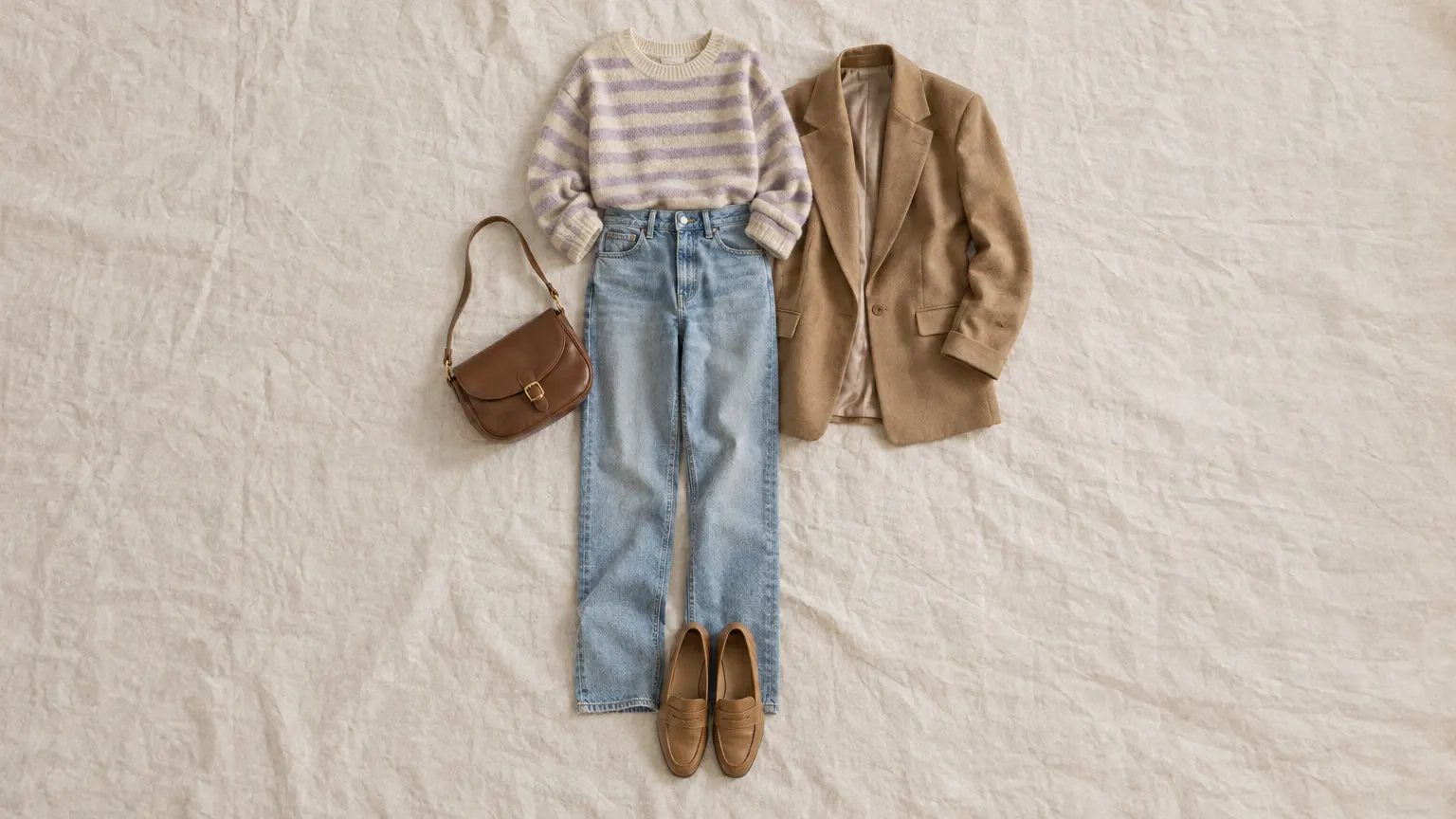
| Lavender | Cream, gray, mint, white | Lavender knit, white jeans |
| Rust | Olive, cream, denim, teal | Rust skirt, cream sweater |
Let one color lead: the 60/30/10 split
When you wear more than one color, give each one a share. A split borrowed from interior design keeps it balanced: one color covers most of the outfit, a second about a third, and a third color shows up in a small dose.
| Share | What it covers | Example |
|---|---|---|
| 60% | Your biggest pieces | Navy trousers and a navy coat |
| 30% | The top or a layer | A cream sweater |
| 10% | One small accent | A red bag or red flats |
It is a guide, not a ruler. The point is that one color leads. Two colors at half and half can look like a uniform, while one leading color and a smaller second look chosen.
Try a tonal outfit
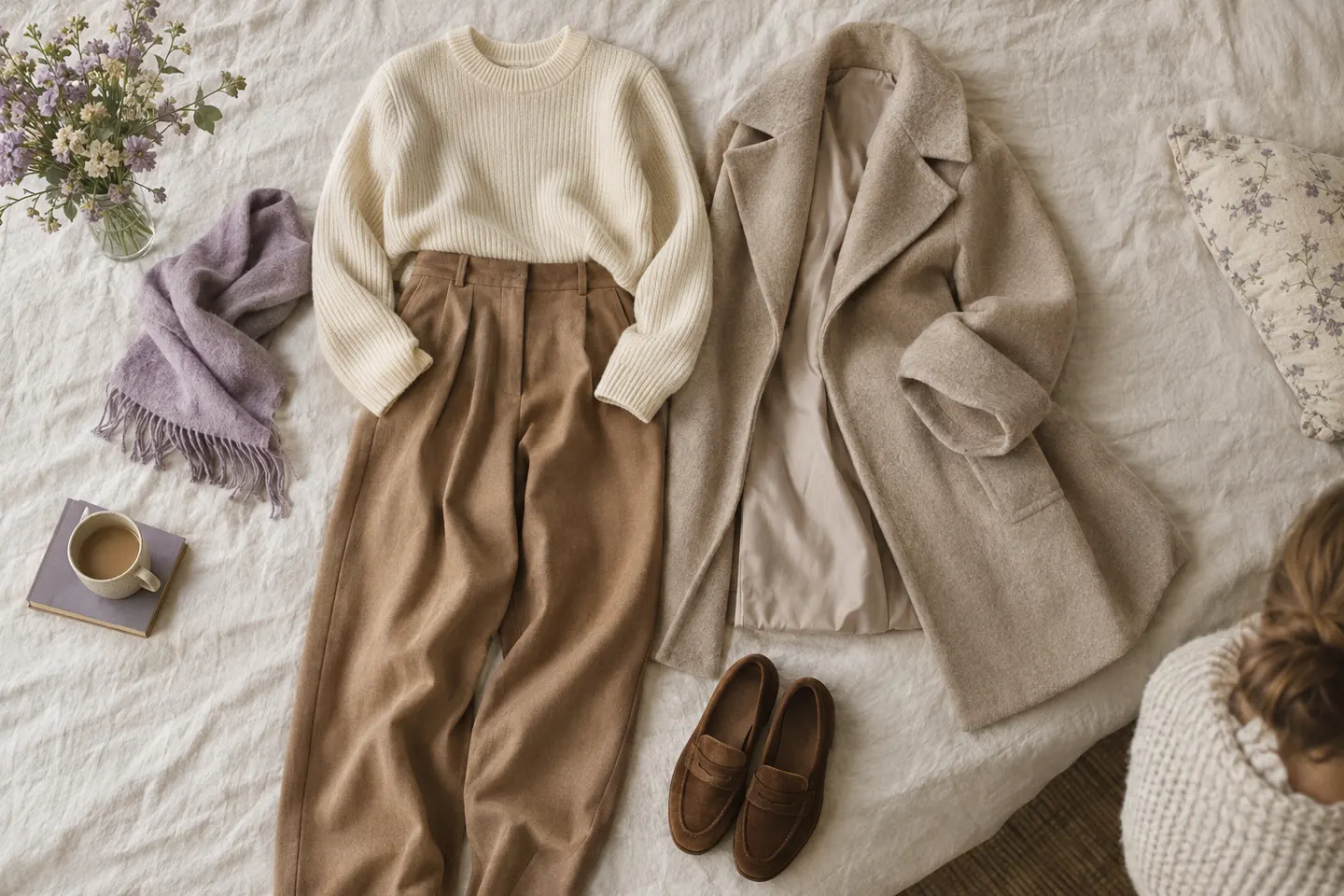
A tonal outfit is one color in several shades: cream, beige, camel and brown, or pale blue, mid blue and navy. It always matches, and it looks polished with very little thought.
Make it work with texture: a ribbed knit, smooth trousers, a suede shoe. Without texture, one color from head to toe can look flat. Mix light and dark shades too, so the eye can tell the top from the bottom.
All black works the same way. A matte knit, a leather shoe and a silky shirt together look finished instead of plain.
Mix patterns without clashing
Patterns feel risky, but two rules make them safe.
- One pattern, everything else solid. A striped top with plain jeans, or a floral dress with a plain cardigan. Pick the solids from a color inside the pattern.
- Two patterns: different sizes, one shared color. Thin stripes with a big floral, or a small check with a wide stripe. If both carry the same red or navy, they look like a pair.
Breton stripes, small polka dots and leopard print act almost like neutrals, so they mix with more than you might think. Save three patterns at once for when two feel easy.
See what your closet is made of
Matching gets easier when you know which colors you own. Many closets lean on a few neutrals, plus a handful of colors that rarely get worn because nothing seems to go with them. The table above usually has an answer for those.
Clozzie fills in each piece's color when you add it from a photo, and its insights show the colors in your closet at a glance. Filter your closet by color to see everything you own in navy or cream, then try those pieces on the outfit canvas next to the one you want to wear.
For formulas that put these pairs to work, see how to put outfits together. If you are planning a capsule wardrobe, choose its colors from the pairs above, so every piece goes with the rest.
Questions people ask
What colors go with everything?
Neutrals: black, white, cream, gray, navy, beige, camel and blue denim. Build an outfit on one or two of them and almost any color will match.
How many colors should I wear at once?
Three is an easy limit: two neutrals and one color, or one color in a few shades. More can work, as long as one color leads.
Can I wear black and navy together?
Yes. It works best when the difference is clear: pick a navy that is not nearly black, or put a white or cream piece between them.
How do I mix two patterns?
Pick two patterns of different sizes that share one color, like thin stripes with a large floral that both have navy in them.