Closet organization4 min read
Closet organization tips that keep it tidy.
Closet organization ideas and tips that work: put what you wear most at eye level, use matching hangers, fold what stretches and label every bin.
In short
- Keep what you wear every week between shoulder and knee height; high shelves and the floor take the rest.
- Hang what wrinkles, fold what stretches, and use matching hangers and shelf dividers so it all stays put.
- Give every piece one home, write the homes down, and spend ten minutes a week putting things back.
The best closet organization ideas come down to one rule: give every piece a fixed spot, and keep what you wear most where it is easiest to reach. Matching hangers, a few shelf dividers and labeled bins do the rest.
Before you start, clear out what you no longer wear. Our guide on how to declutter a closet takes one afternoon, and fewer clothes are far quicker to organize.
Sort your closet into zones by reach
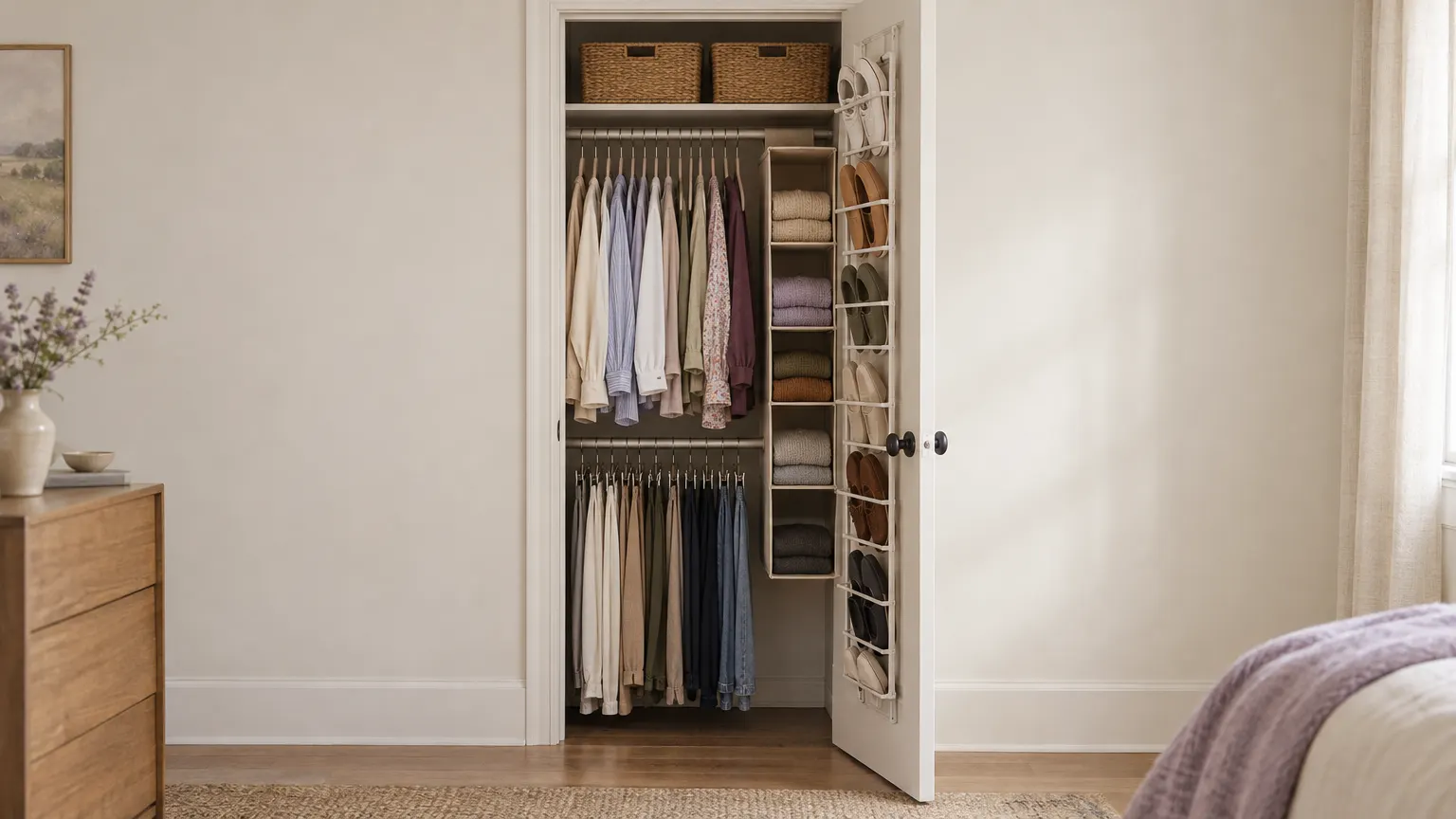
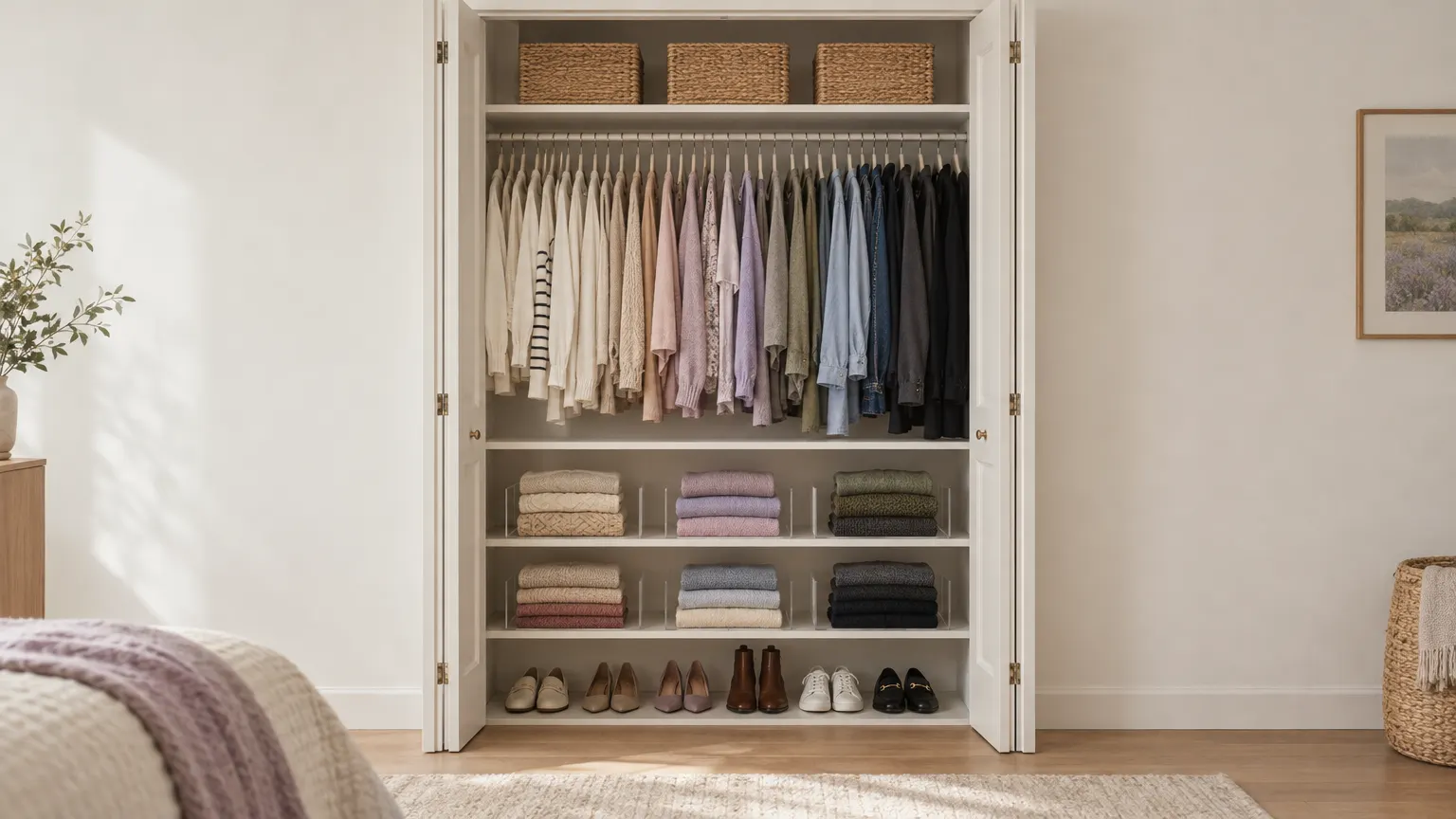
Not every spot in a closet is equal. The space between your shoulders and your knees is where you can see and grab things without thinking, so save it for what you wear every week.
| Zone | What goes there | Why |
|---|---|---|
| Rail at eye level | Everyday tops, work pieces, jeans | You reach for these daily |
| Middle shelves | Folded knits, t-shirts, workout clothes | Easy to see in low stacks |
| Top shelf | Off-season clothes, bags, keepsakes | Hard to reach, rarely needed |
| Floor | Shoes, boots, a laundry basket | Heavy things stay low |
| Back of the door | Belts, scarves, tomorrow's outfit | Narrow things on hooks |
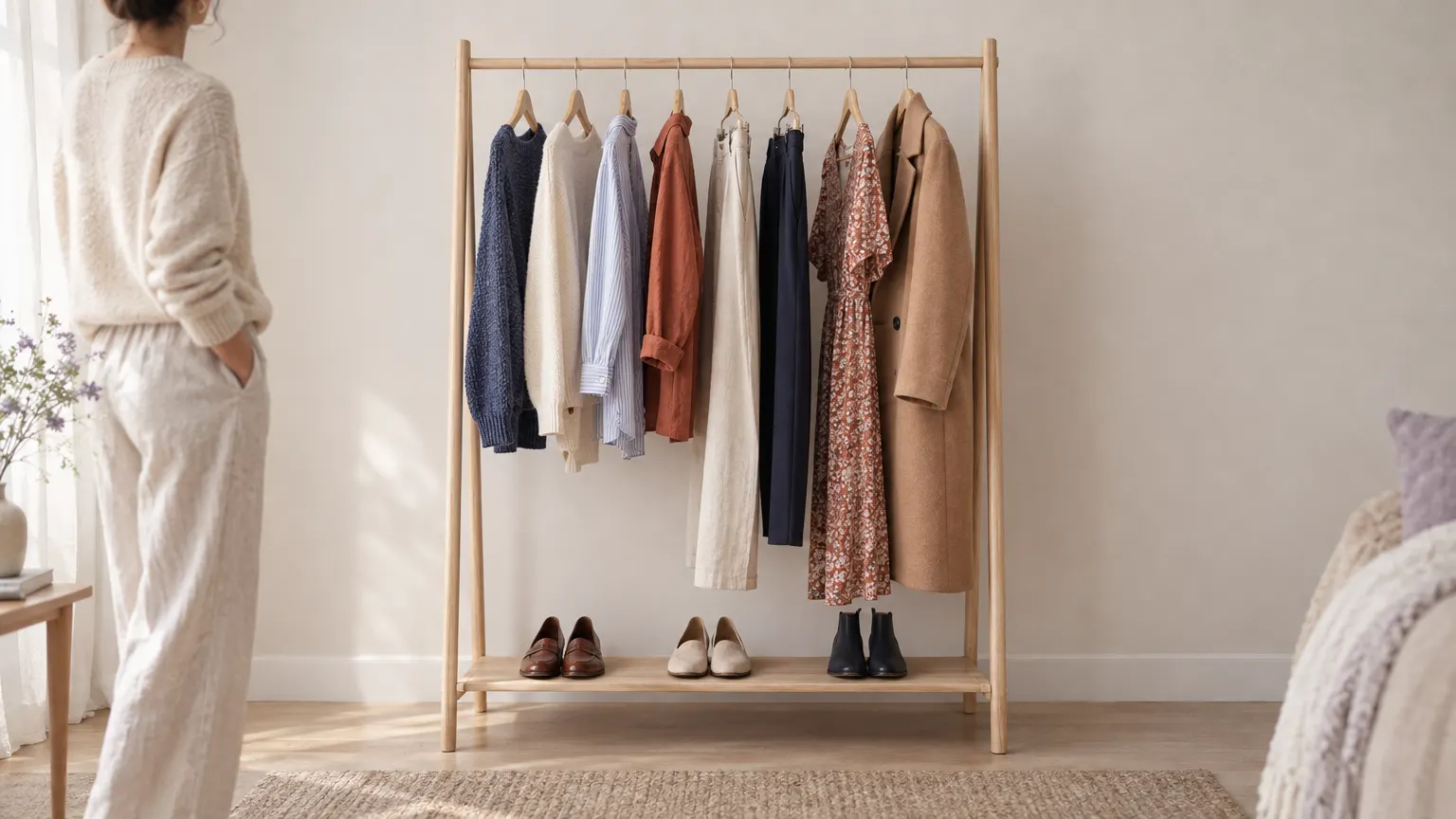
On the rail, group pieces by type (shirts, then dresses, then jackets) and sort each group from light to dark. You find things faster, and you notice when you own five of the same cream sweater.
Keep things you wear together close to each other: belts near trousers, tights near skirts and dresses, workout clothes near sneakers. Getting dressed then happens in one spot.
Hang or fold: let the fabric decide
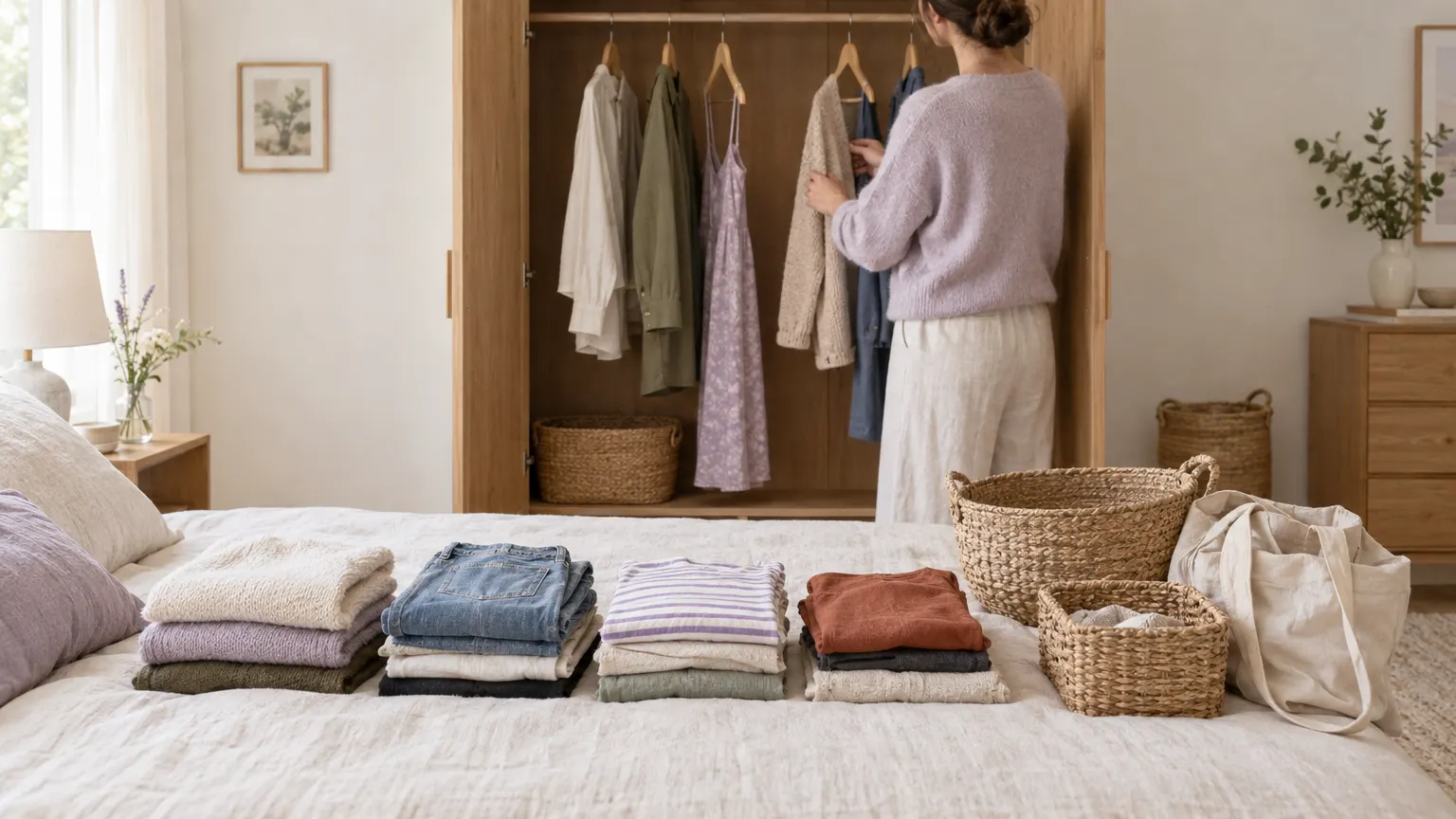
One rule settles most of it: hang what wrinkles, fold what stretches.
- Hang shirts, blouses, dresses, blazers, coats, creased trousers and anything silk or linen.
- Fold knitwear, t-shirts, jeans, leggings and workout clothes. Sweaters stretch at the shoulders on a hanger over time.
- In a drawer, fold t-shirts and leggings small and stand them on edge like files, so you see every one when you open it.
Use matching hangers and give each stack an edge
Matching slim hangers are the simplest change that makes a closet look calmer. They sit at one height, take less room than a mix of plastic and wire, and velvet ones stop silky tops from sliding off. Hang everything facing the same way, so the rail reads as one even line and you see each front as you slide through.
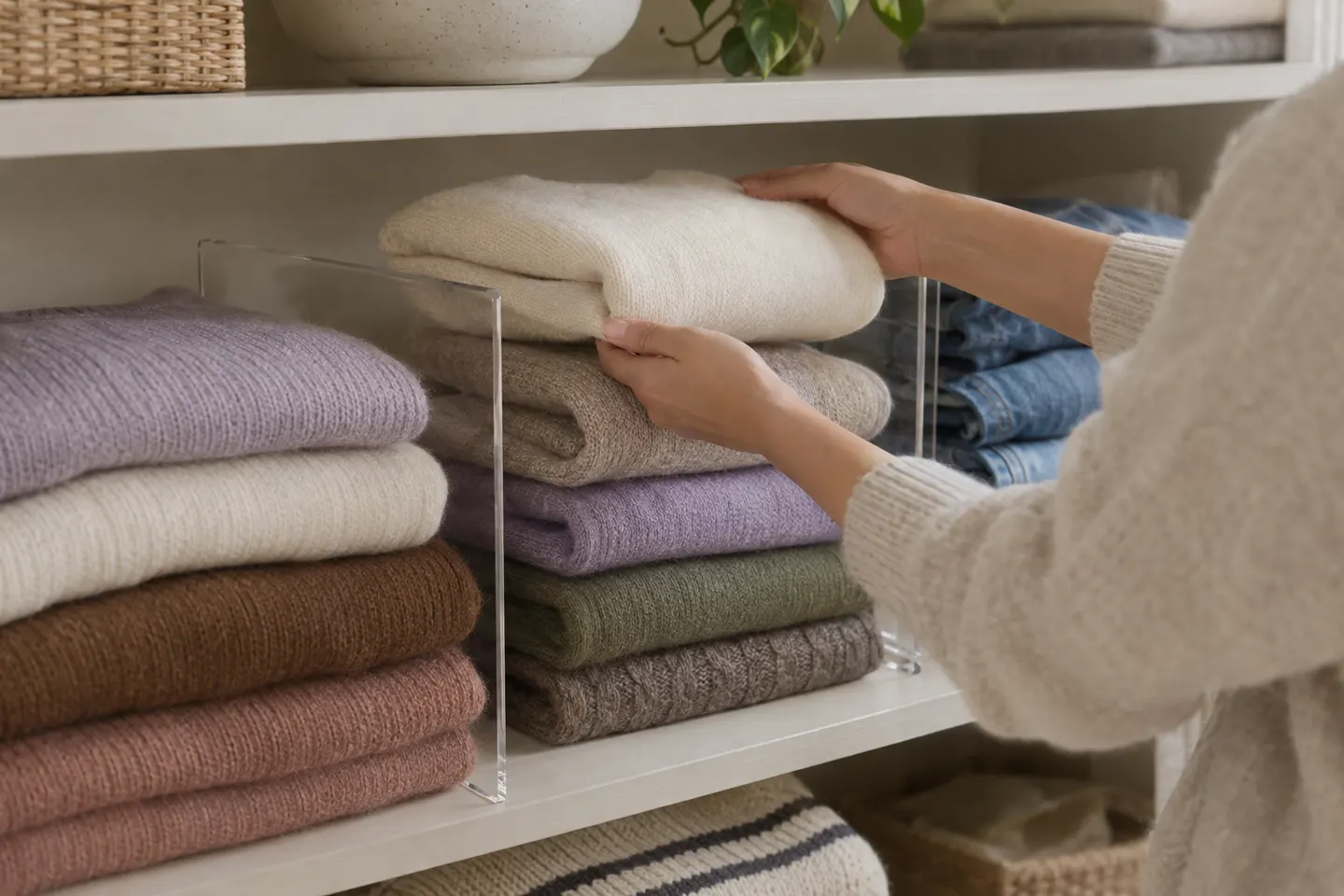
On shelves, folded stacks fall over once they get tall. Clear shelf dividers keep each stack upright and give it a fixed home: jeans here, sweaters there. Keep stacks low enough to pull one piece from the middle without the rest sliding.
Put small things in labeled bins
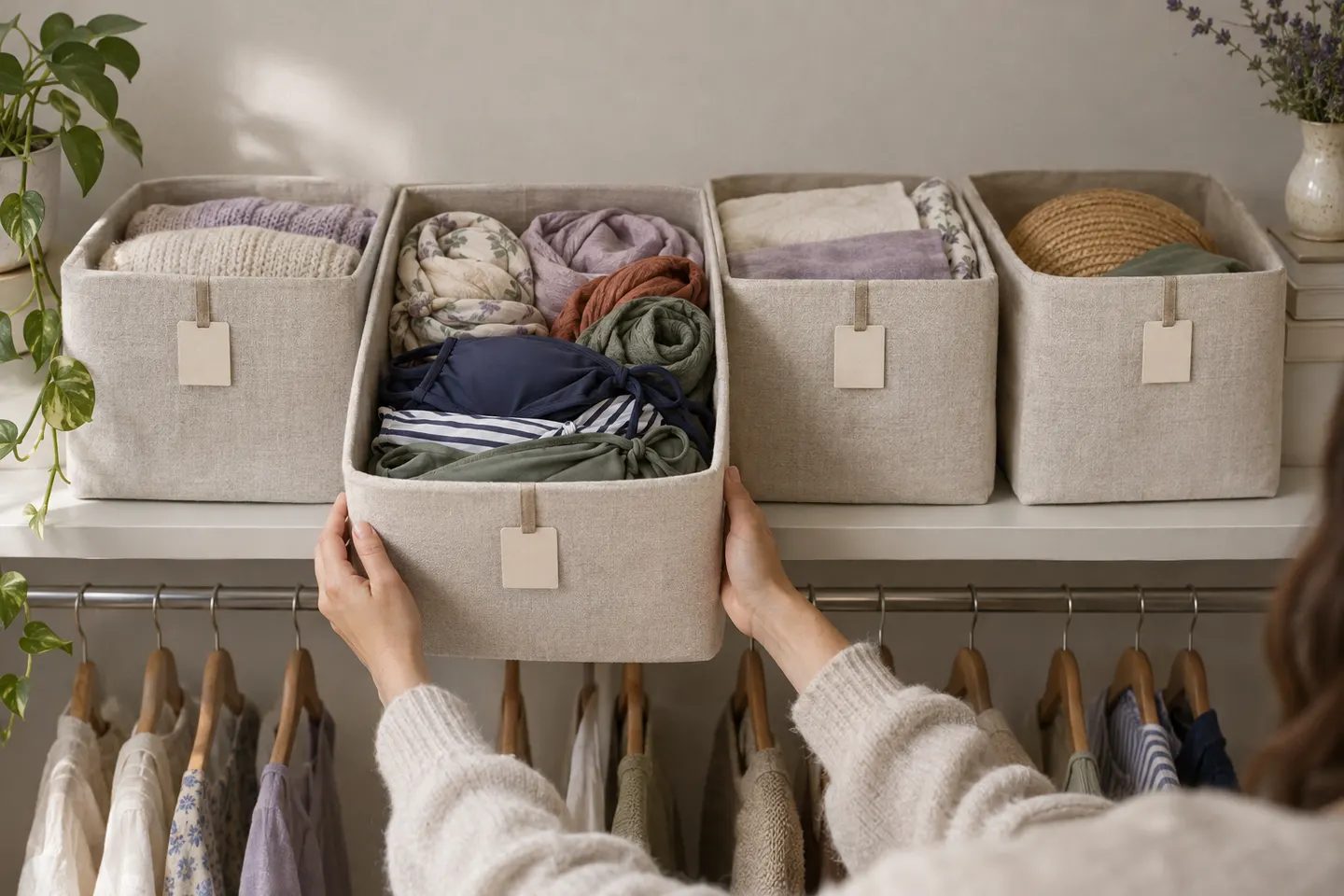
Socks, scarves, belts, swimwear and small bags get lost on an open shelf. One bin per kind of thing, with a label on the front, keeps them together and tells you where they go back.
- Pick one style of bin so the shelf reads as one piece.
- Label the front, not the lid, so you can read it when the bin sits up high.
- Use clear boxes for shoes you wear less often, so you see them without opening each one. Pairs on an open shelf take less width set heel to toe.
- Keep one bin empty as a landing spot for anything without a home yet, so it never turns into a pile.
Write down where everything lives
The closets that stay tidy are the ones where every piece has one home. Decide the homes once and write them down. Taping the list inside the door helps for the first few weeks.
| Item | Where it lives |
|---|---|
| Everyday tops | Rail, eye level, left side |
| Work trousers | Rail, next to work tops |
| Sweaters | Middle shelf, between dividers |
| Swimwear | Bin on the top shelf |
| Winter coats in summer | Under-bed box |
| Party shoes | Clear box, top shelf |
Clozzie can hold that list for you. Give each piece a location with the same names as your list, and the app answers "where are my sandals?" before you open a single bin. Mark what is in the laundry, and move the pieces you have stopped wearing to the archive instead of back onto the rail.
Fix the problems that keep coming back
Most closets don't fall apart all at once. One small problem creeps back and the rest follows.
| Problem | Fix |
|---|---|
| A chair full of worn-once clothes | One hook or basket for "wear again" |
| Shoes in a heap on the floor | A two-tier rack, pairs facing out |
| Shelf stacks keep falling | Shelf dividers and lower stacks |
| Can't tell what is in the bins | Labels on the front, or clear boxes |
| Rail too full to slide hangers | Move off-season pieces out |
| Tidy closet, still nothing to wear | Plan outfits from what you own |
That last one is not a storage problem. If your rail is full and tidy and you still can't get dressed, try building outfits from a short list of pieces you love, the idea behind a capsule wardrobe. If space is the problem, these small closet organization ideas get more out of every shelf.
Questions people ask
How do I organize my closet by color?
Group by type first, then sort each group from light to dark: white and cream, then colors, then navy and black. You find things faster and see repeats at a glance.
Is it better to fold or hang clothes?
Hang what wrinkles, like shirts, dresses, blazers and linen. Fold what stretches, like sweaters, t-shirts, jeans and workout clothes.
What should go on the top shelf of a closet?
Things you need a few times a year: off-season clothes, occasion bags, travel gear and keepsakes. Keep them in labeled bins so you know what is up there without climbing.
How do I keep my closet organized?
Give every piece one home and put it back there the same day. A ten-minute reset once a week stops small piles from growing.