Shopping smarter4 min read
How to build a sustainable wardrobe with the clothes you have.
How to build a sustainable wardrobe: wear what you own first, buy less and better, check quality, go secondhand and care for clothes so they last.
In short
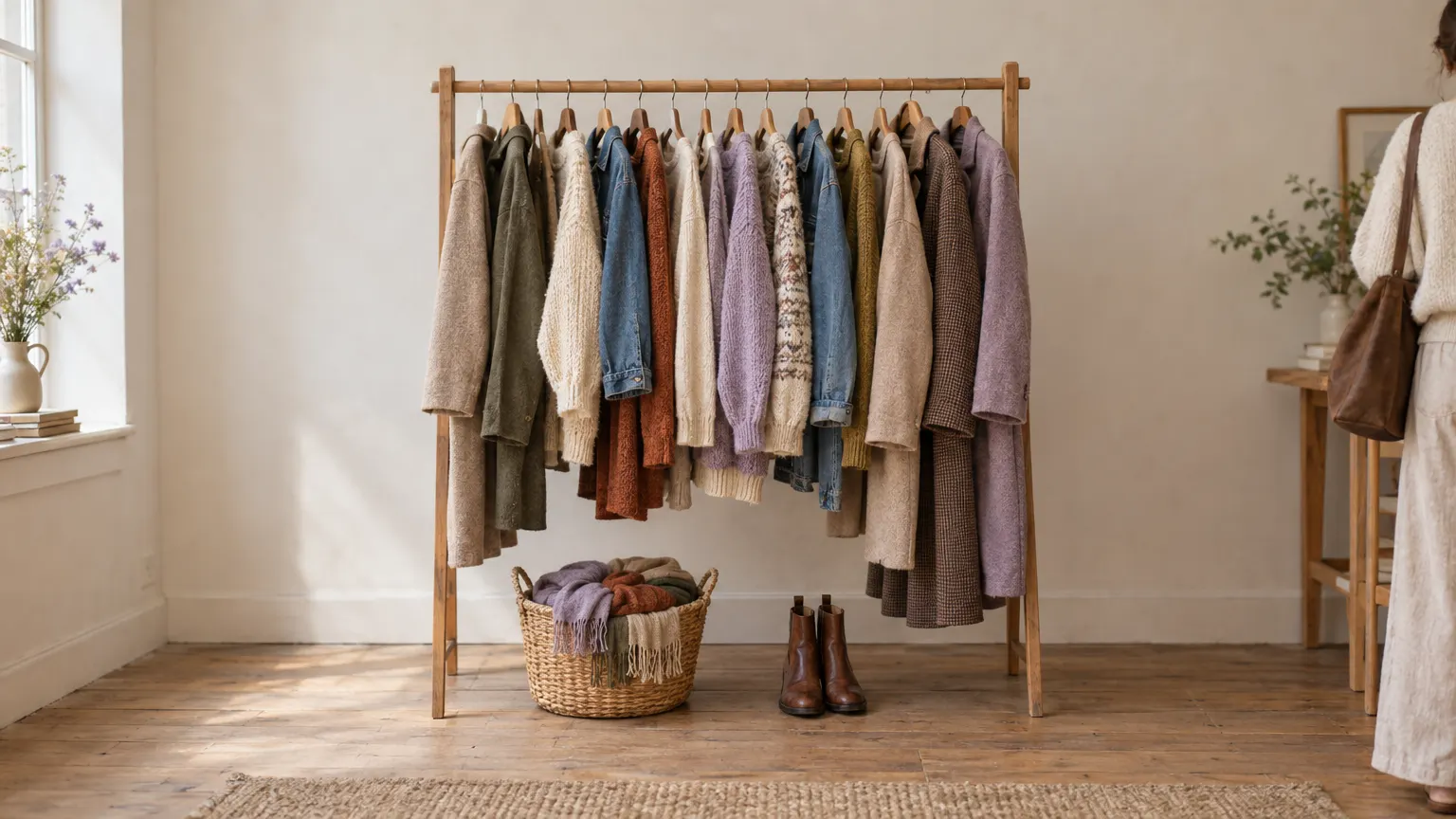
- The most sustainable piece is the one already in your closet. Wear it more before you buy anything new.
- When you buy, buy less and better: check the seams, fabric and buttons, and think in cost per wear.
- Look secondhand first, wash cold, air dry, and mend small damage before it grows.
A sustainable wardrobe starts with the clothes you already own: wear them more, buy less and better when you do buy, look secondhand first, and care for what you have so it lasts for years. You don't need to replace anything to begin.
It's less about buying the right new things and more about buying fewer things and keeping them longer. Here is how, in plain steps.
Wear what you already own
The most sustainable piece of clothing is one that is already in your closet. Before you buy anything, get more out of what is there.
- Shop your closet first. Pull out pieces you forgot about and build outfits around them.
- Find your real gaps by noticing what you reach for and can't find, not what a shop says is new.
- Repair before you replace. A loose hem or a missing button is ten minutes of work.
Clozzie helps you see what you have. Snap each piece once and log what you wear on the calendar: its insights show how much of your closet you really wear, your most worn pieces, and cost per wear for pieces with a price. The forgotten pieces show up by themselves, and you can put them into new outfits on the canvas before you think about shopping.
Buy less, and better
When you do buy, choose fewer pieces you will wear for years. Three questions help:
- Can I see myself wearing this often, for several years?
- Does it go with at least three things I already own?
- Is it made well enough to last that long?
Cost per wear is the easiest way to compare: divide the price by the number of times you will wear it. A well-made coat you wear every winter for years can cost less per wear than a cheap one that pills by spring. Our guide on how to stop impulse shopping works through an example.
A short list of pieces that all go together also means you need less. A capsule wardrobe is built on that idea.
Check the quality in the shop
You don't need to be an expert to spot a well-made piece. Spend a minute on these checks before you buy, new or secondhand.
| Check | Good sign | Warning sign |
|---|---|---|
| Seams | Small, even stitches that lie flat | Loose threads, puckering |
| Fabric | Dense, springs back when squeezed | See-through when held to the light |
| Buttons | Sewn on tightly, a spare inside | Hanging by a thread |
| Zips | Run smoothly and lie flat | Catch, or wave along the seam |
| Lining | Hangs freely, seams finished | Pulls the outside out of shape |
| Pattern | Stripes and checks meet at seams | Pattern jumps at every seam |
Read the care label too. A piece you can wash at home is one you are more likely to wear and keep.
Look secondhand first
Buying secondhand keeps clothes in use, and it usually costs less. Thrift shops, vintage shops, resale apps and clothing swaps with friends all count.
- Go with a list, so a bargain doesn't turn into another impulse buy.
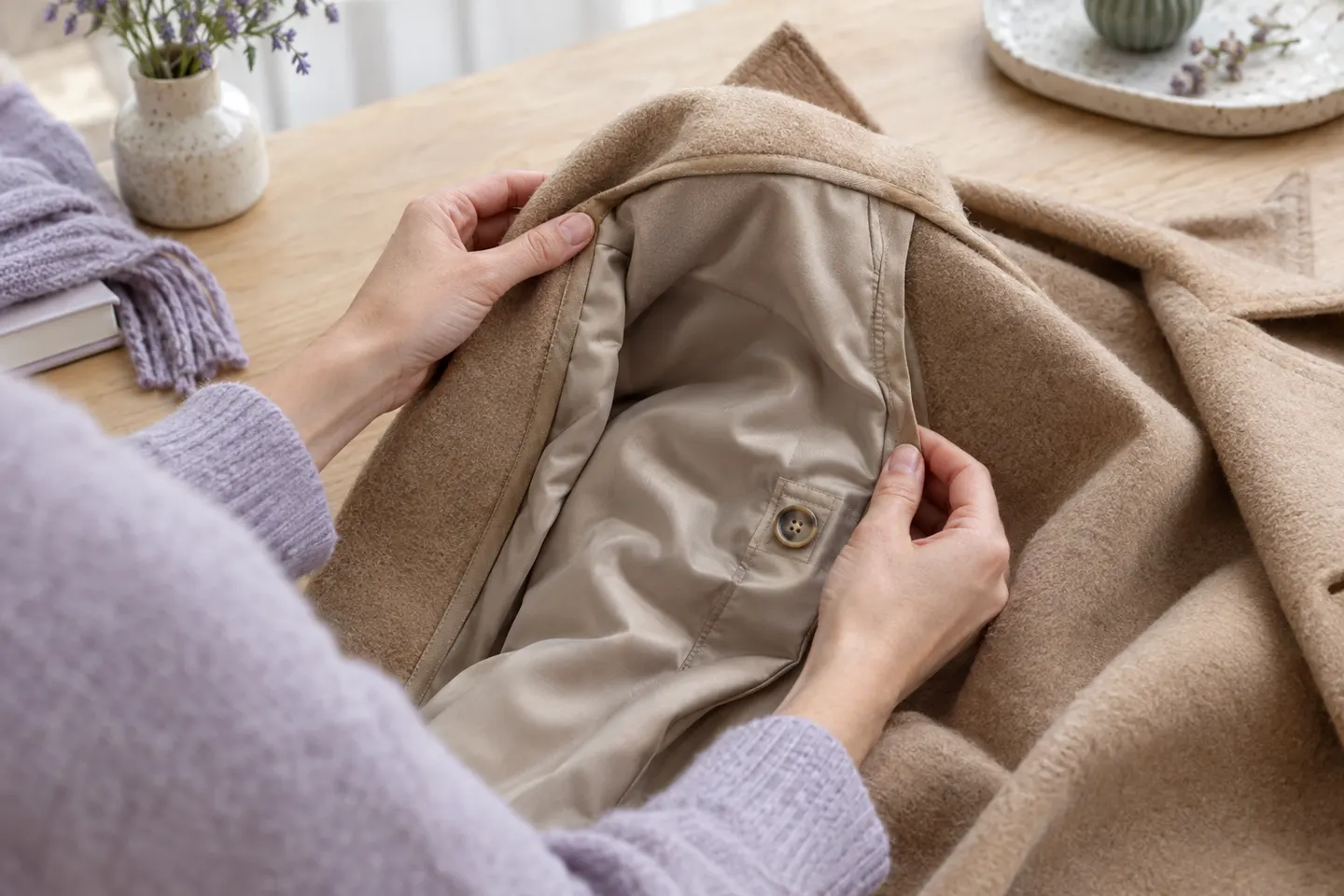
- Run the same checks as above, and look under the arms and at the cuffs, where wear shows first.
- Try things on, or bring your measurements. Sizes vary between brands and decades, so an old size label tells you little.
- Look for natural fabrics like wool, cotton and linen in good condition. Well made, they last.
- Pass on what you don't wear, by selling, swapping or donating it, so it gets a second life too.
Care for clothes so they last
How you wash and dry clothes makes a big difference to how long they look good.
| Habit | Why it helps |
|---|---|
| Wash less often | Jeans and knits rarely need it after one wear |
| Wash cold | Gentler on fabric and colors, and uses less energy |
| Turn clothes inside out | Protects the outside from rubbing |
| Air dry | Dryer heat shrinks and wears fabric |
| Use a mesh bag | Keeps delicates and straps from snagging |
| Fold knitwear | Hangers stretch the shoulders |
A piece you wore for a few hours often only needs airing: hang it by an open window overnight, then put it away. Keep stored clothes clean, folded and out of direct sun, which fades color.
Mend small damage early
Small repairs keep a piece in your closet for years, and most take minutes:
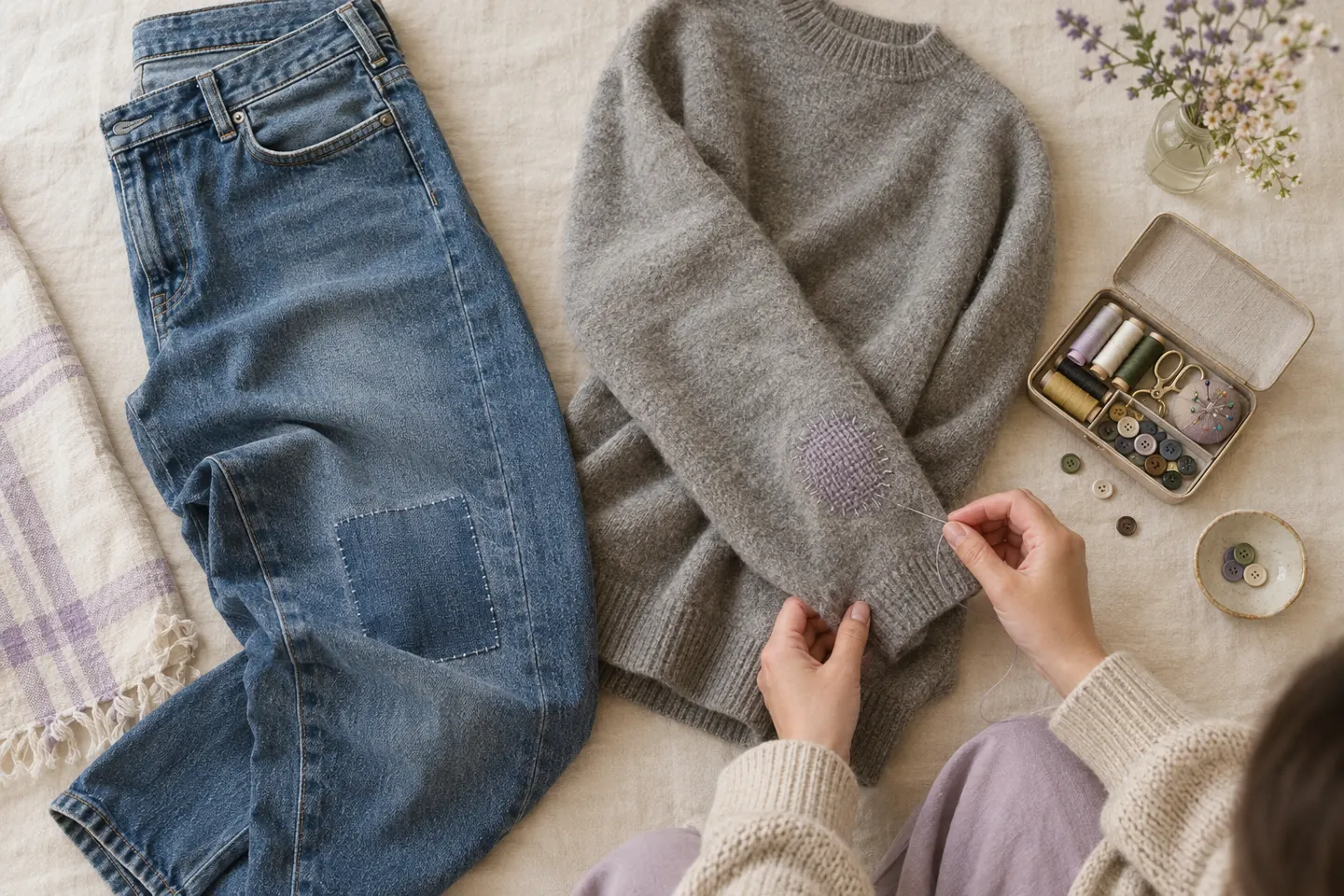
- Sew buttons back on as soon as they come loose.
- Fix small holes before they grow. A darn or a patch that shows is fine.
- Remove pills from knitwear with a fabric shaver or a sweater comb.
- Take pieces to a tailor for hems, zips and fit. A piece that fits well gets worn.
Once you know what you own and look after it, buying less comes easily. If your closet is too full to see it all, start by learning how to declutter a closet.
Questions people ask
What is a sustainable wardrobe?
A wardrobe you wear fully and keep for a long time: fewer pieces, chosen with care, looked after and repaired, and bought secondhand when you can.
How do I build a sustainable wardrobe on a budget?
Start by wearing and mending what you already own, which costs nothing. When you need something, look secondhand first and buy fewer, better pieces.
How can I tell if clothing is good quality?
Look at the seams, the fabric and the buttons. Small even stitches, dense fabric that springs back when you squeeze it, and buttons sewn on tightly are good signs.
Is buying secondhand more sustainable?
Usually, yes. A secondhand piece already exists, so buying it keeps clothes in use, and it often stands in for a new piece you would have bought.