Closet organization4 min read
How to declutter your closet in one afternoon.
Declutter your closet in one afternoon: set up four piles, ask two honest questions about each piece, and keep a maybe box for the hard calls.

In short
- Block out two to four hours, empty one category at a time, and sort every piece into four piles.
- Two questions decide most pieces: would I buy this today, and does it fit me and my life right now?
- Put the keepers back by type and color, then use one in, one out so the closet stays this way.
To declutter your closet, take everything out one category at a time, sort each piece into keep, donate, store or toss, and only put back what you wear and what fits. Two honest questions decide most of it.
The rest of this guide is the setup that makes it quick, what to do with the pieces you can't decide on, and how to put it all back so it stays tidy.
Set up before you pull anything out
Clearing out a closet goes wrong when it turns into one huge pile on the bed at 9 PM. Ten minutes of setup avoids that.
- Block out two to four hours. A Saturday morning works better than a weeknight.
- Get good light and a full-length mirror. You will try things on.
- Have four bags or boxes ready, labeled, so nothing waits in a "deal with later" heap.
- Put on music or a podcast. It keeps you going through the dull middle.
Sort every piece into four piles
Every piece you touch goes into one of four places, right away. No piece goes back on the rail until the whole category is done.
| Pile | What goes in | Ask yourself |
|---|---|---|
| Keep | Pieces you love, wear and that fit now | Do I feel good in this? |
| Donate or sell | Good condition, but not worn | Would someone else love this? |
| Store | Off-season clothes and true keepsakes | Do I need this, just not now? |
| Toss or recycle | Stained, torn or worn out | Is this at the end of its life? |

Two questions decide most pieces
You don't need a flowchart. Hold each piece and ask:
- If I saw this in a shop today, would I buy it? This cuts through guilt about what it cost. What you paid is gone either way; the question is whether it earns its space now.
- Does it fit my body and my life right now? Not the job you had two years ago or the size you hope to be. Your closet should dress the person you are today.
Two yeses mean keep. One no usually means it goes. If you are not sure, try it on in front of the mirror. Most "maybe" pieces become an easy no once they are on.
What to do with the hard ones
Some pieces resist both questions. Give each kind a plan so it doesn't stall you.
| Hard case | What to do |
|---|---|
| Sentimental, never worn | Take a photo, then keep it in one memory box |
| Can't decide | Seal it in a maybe box dated three months out |
| Expensive but unworn | Sell it, or style it into three outfits this week |
| Doesn't fit right now | Store one small box at most, never the rail |
| Too worn to donate | Textile recycling, or cut it into cleaning rags |
The maybe box is the safety net. If you never open it in three months, donate it unopened. You already proved you don't need what is inside.
Put it back so it stays tidy
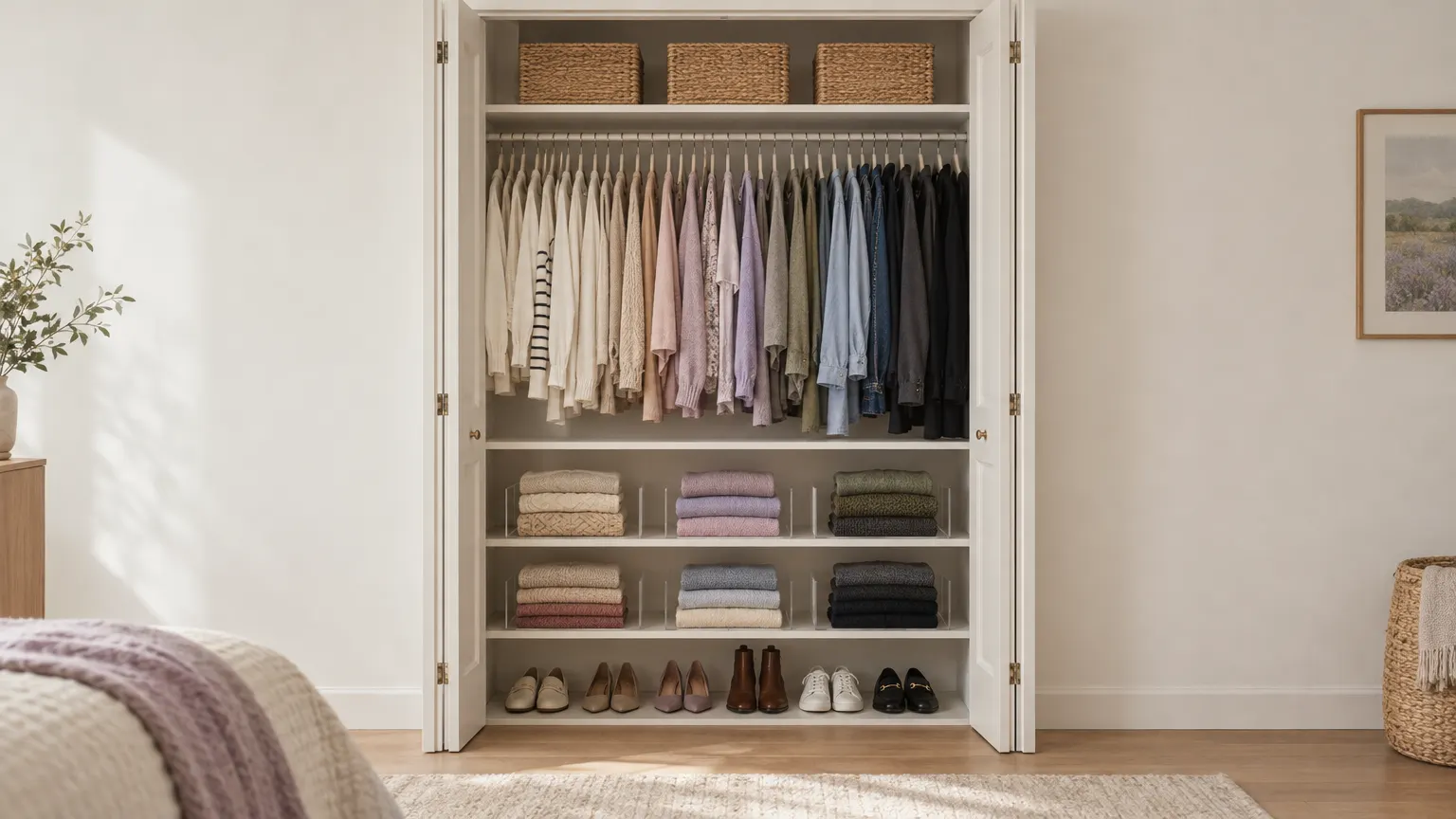
With the closet half empty, put the keepers back in a way that makes mornings easy. Our closet organization tips go deeper, but the basics are:
- Use matching slim hangers. They save space and the rail instantly looks calmer.
- Group by type, then by color, light to dark. You find things faster and see gaps at a glance.
- Keep what you wear most at eye level. Occasion pieces go to the ends of the rail.
- Move off-season clothes up high or under the bed, in labeled boxes.
- Turn every hanger backwards. When you wear something, hang it back the normal way. In six months, the backwards hangers show you exactly what you never wear.

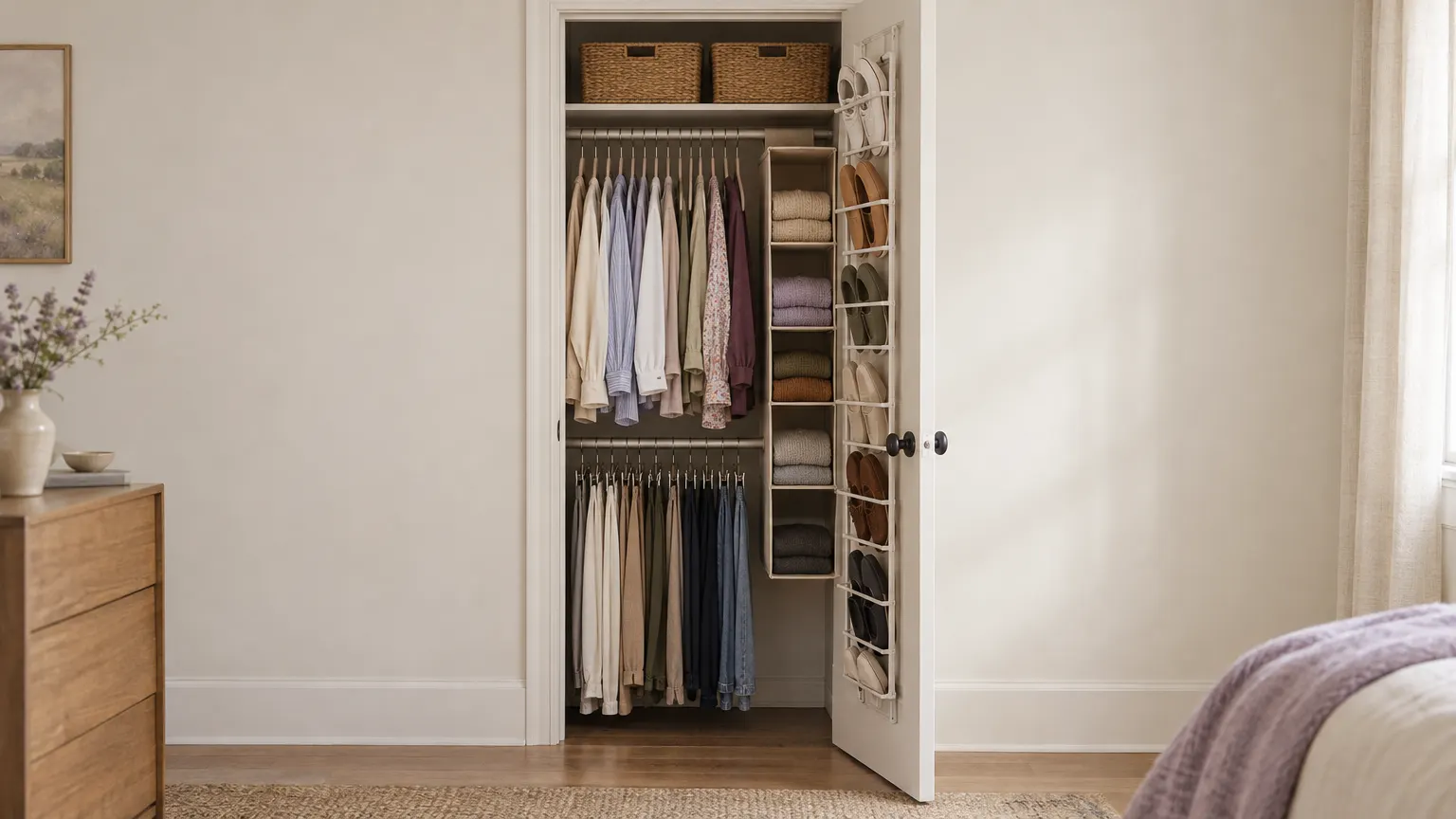
If your closet is tiny, these small closet organization ideas will help you fit it all.
Keep it from filling back up
A cleanout lasts as long as the habits after it. Three keep it that way:
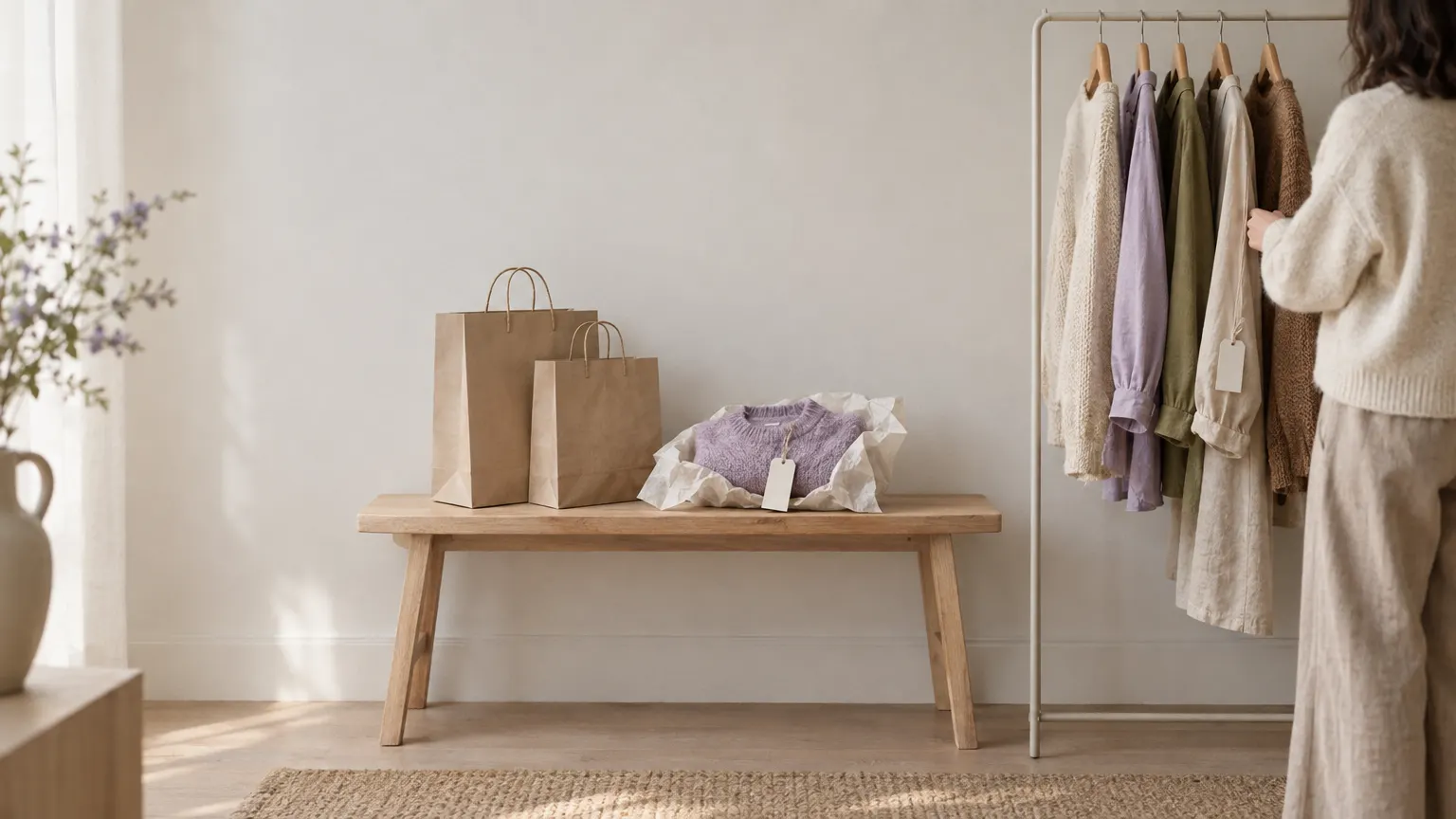
- One in, one out. Every new piece replaces one you let go of.
- A ten-minute check each month, pulling anything you skipped or that no longer fits.
- A swap each season, when you store one season and bring out the next.
Knowing what you actually wear makes the next cleanout far quicker. In Clozzie you snap each piece you kept, log what you wear on the calendar, and its insights show your most worn pieces and how much of your closet you really wear. The pieces you never reach for show up on their own, so you can archive them before they pile up. It also helps you stop buying clothes you won't wear in the first place.
Questions people ask
How long does it take to declutter a closet?
Two to four hours for most closets. If yours is very full, split it by category over two days instead of rushing through it all at once.
How many clothes should I keep?
There is no right number. Keep what you wear in a normal month, plus pieces for occasions you really have, like a wedding or a work event.
Should I sell or donate the clothes I don't keep?
Sell the few pieces in great condition that are worth the effort, and donate the rest within a week, before the bags find their way back into the closet.
What if I regret getting rid of something?
Use a maybe box. Seal the pieces you can't decide on, date it three months out, and donate the box unopened if you never went looking for anything in it.