Shopping smarter4 min read
How to stop impulse shopping for clothes you won't wear.
How to stop impulse shopping for clothes: wait before you buy, check what you already own, use the three-outfit rule and think in cost per wear.

In short
- Put time between wanting and buying: a day for basics, a week for most clothes, longer for big pieces.
- Only buy a piece if you can name three outfits it makes with clothes you already own.
- Divide the price by how often you will wear it. The cheap sale top can be the costliest piece you own.
To stop impulse shopping for clothes, put time between wanting a piece and buying it, check if you already own something like it, and only buy what makes three outfits with clothes in your closet. Cost per wear tells you which buys are worth it.
Most impulse buys happen because buying is quick and stopping to think is not. The steps below add a little of that thinking time back in.
Why it happens
You don't need a theory. Just notice which of these catch you:
- It's easy. A saved card and one-tap checkout leave no moment to think.
- It's on sale, or the shop says only two are left, so waiting feels like losing.
- It's a mood. A long day, a boring evening, scrolling in bed.
- It looks great on someone else, in good light, styled with clothes you don't own.
You probably have one or two. Those are the ones to block.
Make yourself wait
A waiting rule is the most useful habit on this list. When you want something, don't buy it yet: save it in a note or a wish list and come back after a set time.
| Kind of buy | Wait before buying |
|---|---|
| Basics, like socks or a plain tee | One day |
| Most clothes | One week |
| Coats, boots or a big bag | Two weeks |
| Anything in a sale | The same as full price |
Most of the time, the want fades. If you still think about the piece when the wait is over, and it passes the checks below, buy it without guilt.
Check your closet first
Many impulse buys are pieces you already own in some form: the fourth black top, the second pair of almost-white sneakers. Before you buy, look.
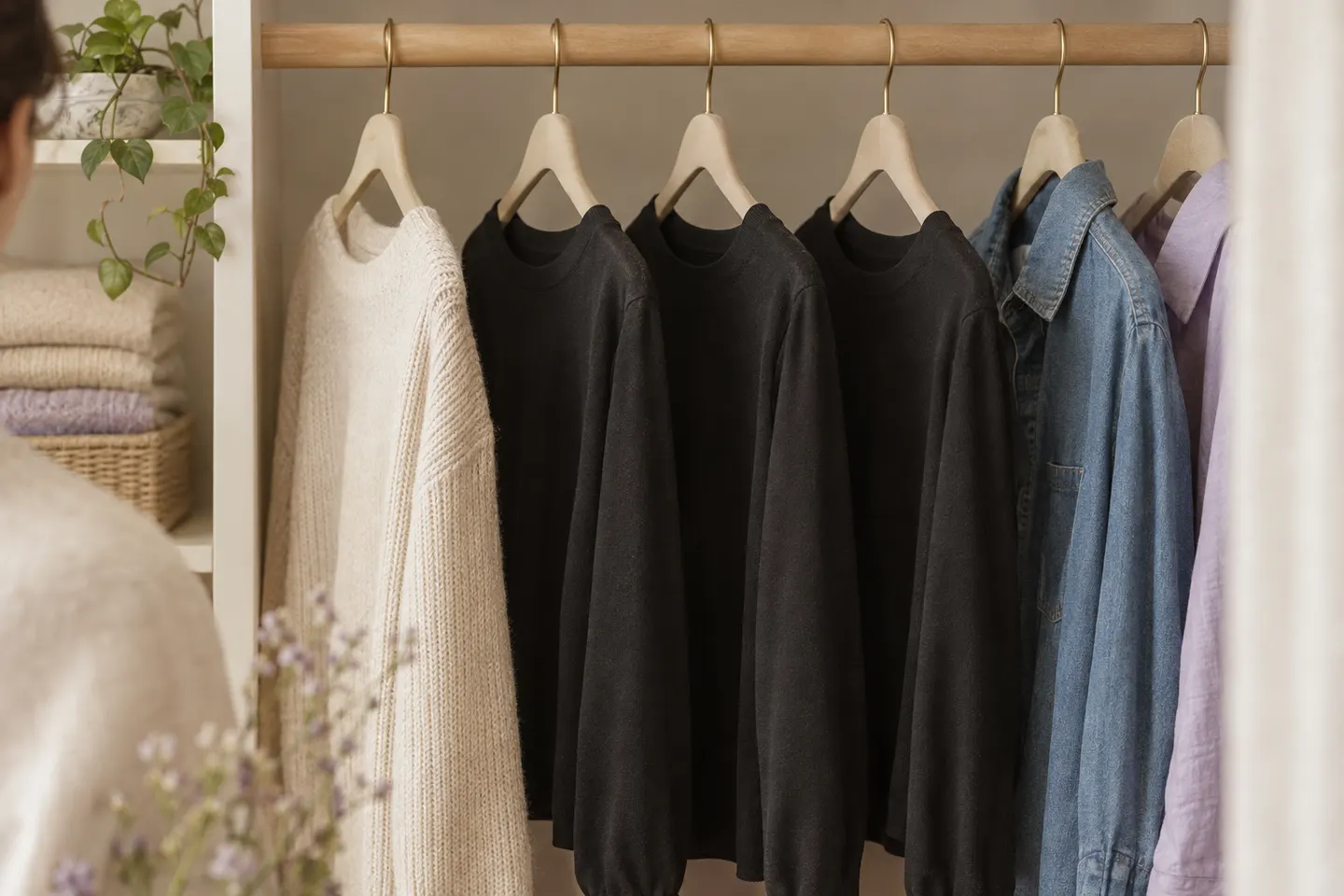
Then use the three-outfit rule: buy a piece only if you can name three outfits it makes with clothes already in your closet. Not "it would look great with boots I'd need to buy". Three real outfits, from what you own today. If you can't name them, the piece will most likely sit there with its tag on.
Think in cost per wear
The price tag tells you what a piece costs once. Cost per wear tells you what it costs each time you put it on: the price divided by the number of times you wear it. Here is an example with round numbers.
| Piece | Price | Times worn | Cost per wear |
|---|---|---|---|
| Sale party top | $30 | 2 | $15.00 |
| Trend sneakers | $60 | 5 | $12.00 |
| Wool coat | $200 | 100 | $2.00 |
| Jeans you love | $80 | 100 | $0.80 |
The cheapest piece in the table is the most expensive one to wear. Before you buy, guess honestly how often you'll wear it. If the cost per wear stays high, let it go.
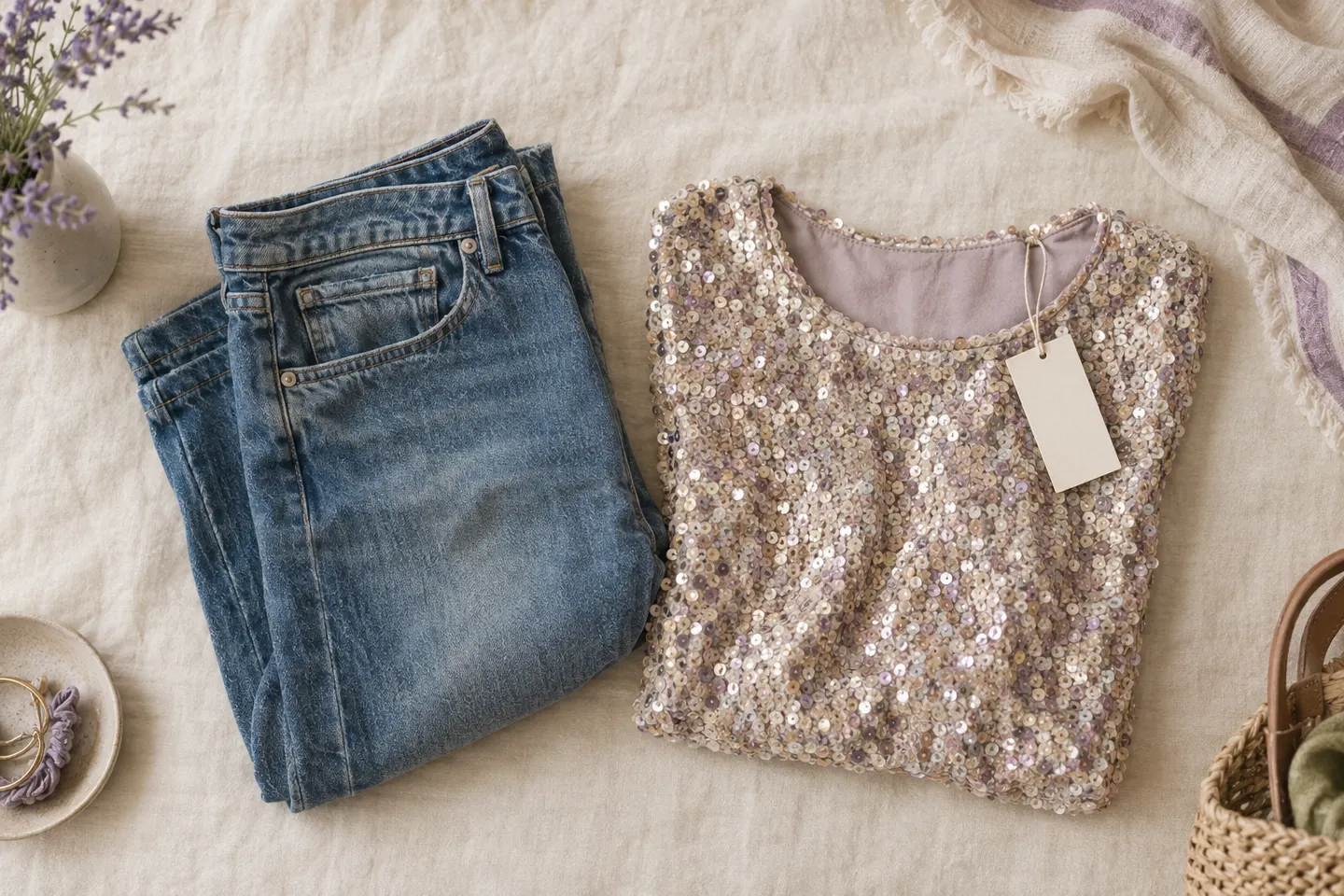
Clozzie does this sum for you. Add the price when you snap a piece and log what you wear on the calendar: each piece shows its cost per wear, and insights add up the money sitting in pieces you haven't worn in a year. In the shop, filter your closet by type and color to see in seconds if you already own a black top like it.
Make shopping slower on purpose
A few small changes take the "quick" out of quick buys:
- Unsubscribe from shop emails. A sale loses its pull when you never hear about it.
- Delete saved cards from shopping sites and apps, so every buy means getting up for your wallet.
- Move shopping apps off your home screen, or delete them.
- Unfollow accounts that make you want to shop more than they make you happy.
- Shop with a list, online or in person, and stop when the list is done.
Keep a wish list instead of a cart
Wanting new clothes is normal. A wish list gives that want somewhere to go without spending anything.
Write down the pieces you'd like, why, and what they would go with. Note the price too: if one goes on sale later, it is a piece you had already chosen, not a sale that chose you. Read the list once a month. Many pieces drop off by themselves, and what stays is a real gap in your closet that you can fill without guilt.
If you want to go further, our guide to a sustainable wardrobe is about buying less and better, and a capsule wardrobe shows how few pieces you really need.
Questions people ask
How long should I wait before buying clothes?
A day for basics and a week for most clothes is usually enough for the urge to pass. For coats, boots and bags, wait two weeks.
What is the three-outfit rule?
Before you buy a piece, name three outfits it makes with clothes you already own. If you can't, it will likely sit in your closet with the tag on.
How do you calculate cost per wear?
Divide what a piece cost by the number of times you wear it. An $80 pair of jeans worn 100 times costs 80 cents a wear.
Why do I keep buying clothes I don't wear?
Usually because buying is quick, and the piece looked good in a photo, in a sale or on a bad day. Waiting, checking your closet first and making checkout slower break the habit.